
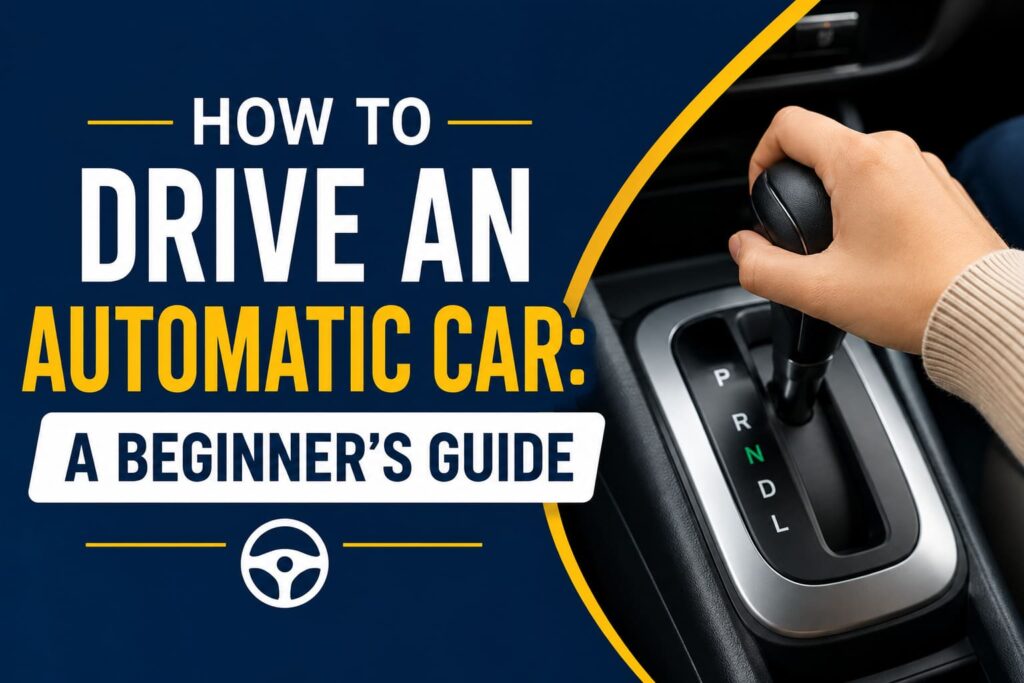
Learning to drive an automatic car is even easier than learning to drive a manual car, as you don’t need to change gears or use a clutch pedal since the car shifts gears automatically. As a result, you spend more time concentrating on steering, speed, road signs, and traffic. This is why many learners choose automatic driving lessons in NSW.
Best and Less Driving School helps learners build confidence in automatic driving and gives an understanding of the foundations. Read this guide to learn how to drive an automatic vehicle and climb and descend hills.
Understanding Automatic Car Gears
Most automatic cars have the following gear positions:
- P (Park) – Used when the car is parked.
- R (Reverse) – Used for reversing.
- N (Neutral) – The car is not in gear.
- D (Drive) – Used for normal driving.
Learn the purpose of each gear before you start driving
How to Drive an Automatic Car Step by Step?
Driving an automatic car is simple when you follow the correct steps
- Firstly, make sure you set your seat and mirrors in a position where you can see clearly and are able to reach the pedals comfortably.
- Make sure you fasten your seatbelt before driving.
- While pressing the brake pedal with your right foot, start the engine. Move the gear selector from (P) (Park) to (D) (Drive) while keeping your foot pressed to the brake. Release the handbrake if you pulled it up.
- Ease your foot up off the brake pedal. The car may pull away slowly by itself. Gently press the accelerator pedal.
- The car changes gear by itself; all you have to do is drive. To brake, just gently press down on the brake.
- When you get to your destination, fully stop, put the gear lever into Park (P), pull up the handbrake, and turn the engine off.
How can you drive an Automatic Car Safely?
Driving safely involves more than just getting the car from one place to another.
- You must always be aware of your environment.
- Keep your eyes on the road and observe the mirrors regularly.
- Keep a safe distance between you and others in front of you, and drive within speed limits.
- Use indicators when turning, overtaking, or changing lanes.
- For beginners, it is recommended to try as much as possible to learn on quiet streets before venturing into heavy traffic.
- The more you practise, the more confident you will become.
How to Drive an Automatic Car Uphill?
Driving an Automatic Vehicle on a Hill in a Proper Way. The fear of driving uphill is common for many learners. Fortunately, the automatic transmission has made this much easier.
When driving up a hill, keep a constant speed and accelerate smoothly if additional power is required. The vehicle will automatically change to a lower gear.
If you have to stop on a hill, keep your foot on the brake pedal. When you need to pull away, gently release the brake and press the accelerator.
Most contemporary automatic vehicles have hill-start assist, which prevents the car from rolling backwards. The tip is to remain calm. Do not accelerate suddenly.
How do you drive an Automatic Car Downhill?
When driving downhill, it is important to control your speed. When going down a hill, do not allow the car to gain too much speed.
Brake gently when needed. If you’re on a steep hill using an automatic car, you can manually select a lower gear to help you control the vehicle.
Always look well ahead and leave plenty of room between your car and the one in front, as it is always safer to apply the brakes early and gently than to apply them suddenly.
What Not to Do When Driving an Automatic Car?
Many beginners at Driving Lessons St Marys make relatively simple mistakes, which may either compromise safety or damage the car. Avoid these common mistakes:
- Never use your left foot for braking.
- Never change into a park while the car is in motion.
- Don’t switch into neutral when going downhill.
- Avoid resting your foot on the brake pedal while driving.
- Never brake or accelerate suddenly.
- When driving, stay focused.
- Other distractions take your attention away from the road.
- Make sure to use your signals.
- Good driving habits help you to keep safe while protecting your vehicle.
Why Learn with Best and Less Driving School?
Learning to drive an automatic car is an exciting step towards independence. Automatic cars are less complicated to learn to drive, but you should still gain some instruction to help you develop strong driving skills and habits.
Best and Less Driving School Blacktown has professional automatic driving lessons for beginners taught by our experienced instructors, including everything from basic vehicle controls and steering techniques to uphill and downhill starts, parking, and driving test preparation.
Whatever level you are at, whether it is your 1st time learning to drive or you are preparing to take the NSW driving test, here at Best and Less Driving School, we can take you to the next level so you are a safe, confident, and responsible driver. Call Best and Less Driving School today and take the first step on your driving journey.
FAQs (Frequently Asked Questions)
How do you drive an automatic car uphill?
It’s important to keep your speed consistent, accelerate smoothly, and apply the brake when you have to stop on a hill.
How do you drive an automatic car downhill?
Drive slowly, brake smoothly, and use a lower gear on steep hills if needed.
What should you not do when driving an automatic car?
Do not use your left foot for braking, do not shift to Park while the vehicle is in motion, and do not get distracted while driving.
Should I put my automatic car in Neutral at traffic lights?
Usually, no. The best thing to do is to leave the car in Drive and keep your foot on the brake pedal.